Across Canada’s agricultural landscape, plastic plays a critical role in protecting crops, improving efficiency, and supporting modern farming practices. But managing that plastic responsibly once it has served its purpose remains a complex challenge. For Cleanfarms Inc., addressing that challenge is not just a mandate—it is the organization’s mission.
Cleanfarms is a not-for-profit environmental stewardship organization working in Alberta and across Canada to help farmers actively contribute to a sustainable future. Through collaboration within the industry, governments, and local partners, Cleanfarms delivers practical recycling solutions that keep agricultural plastics out of landfills and the environment.
“Our mission is to create meaningful change through our programs and offer a tangible way to address agricultural waste management and resource recovery in the community,” Davin Johnson, Cleanfarms’ Alberta Program Advisor says. “By building a circular economy for agriculture, we’re ensuring farmers have accessible, effective ways to manage agricultural plastic waste responsibly.”
From Collection to Circularity
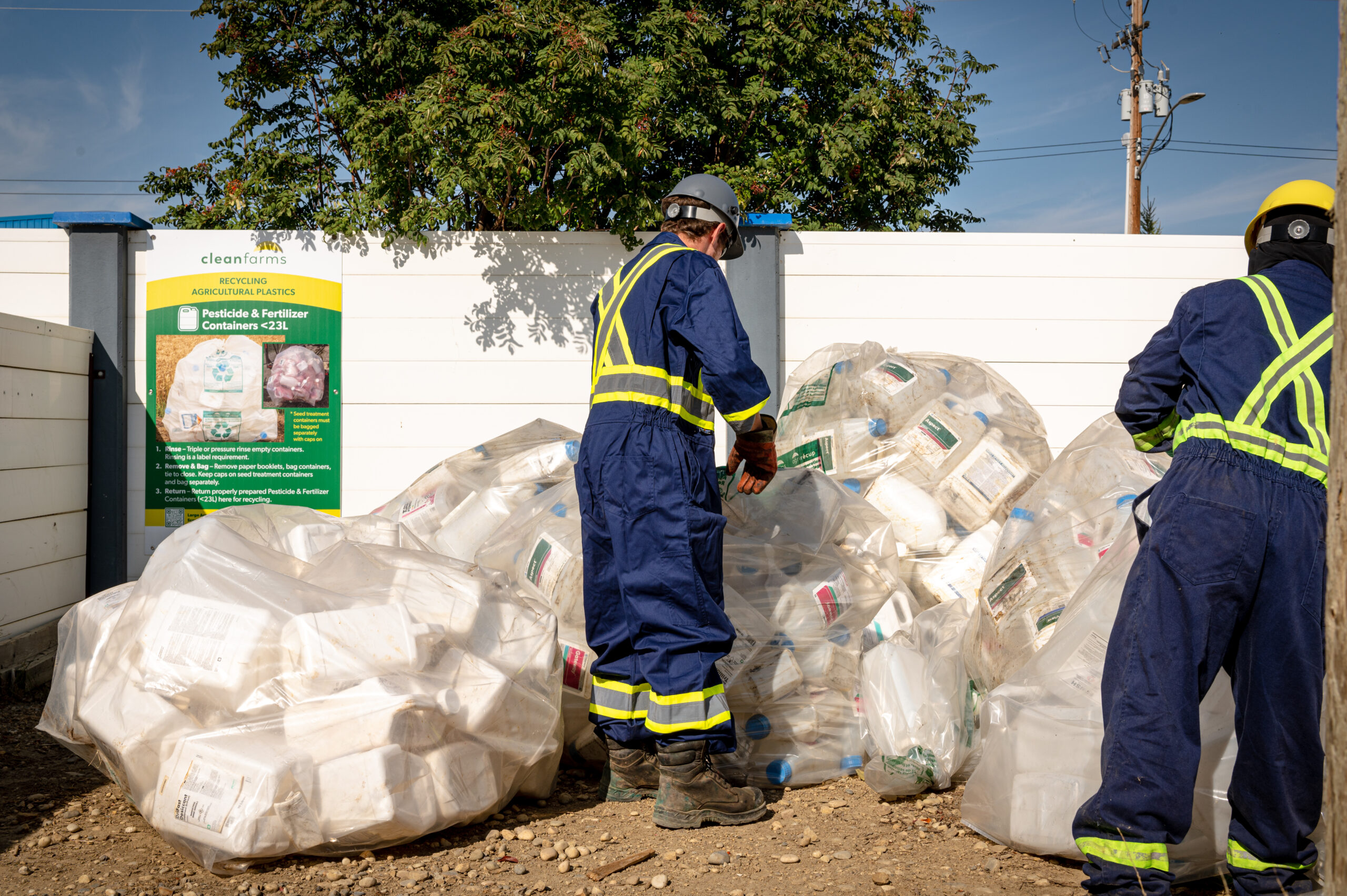
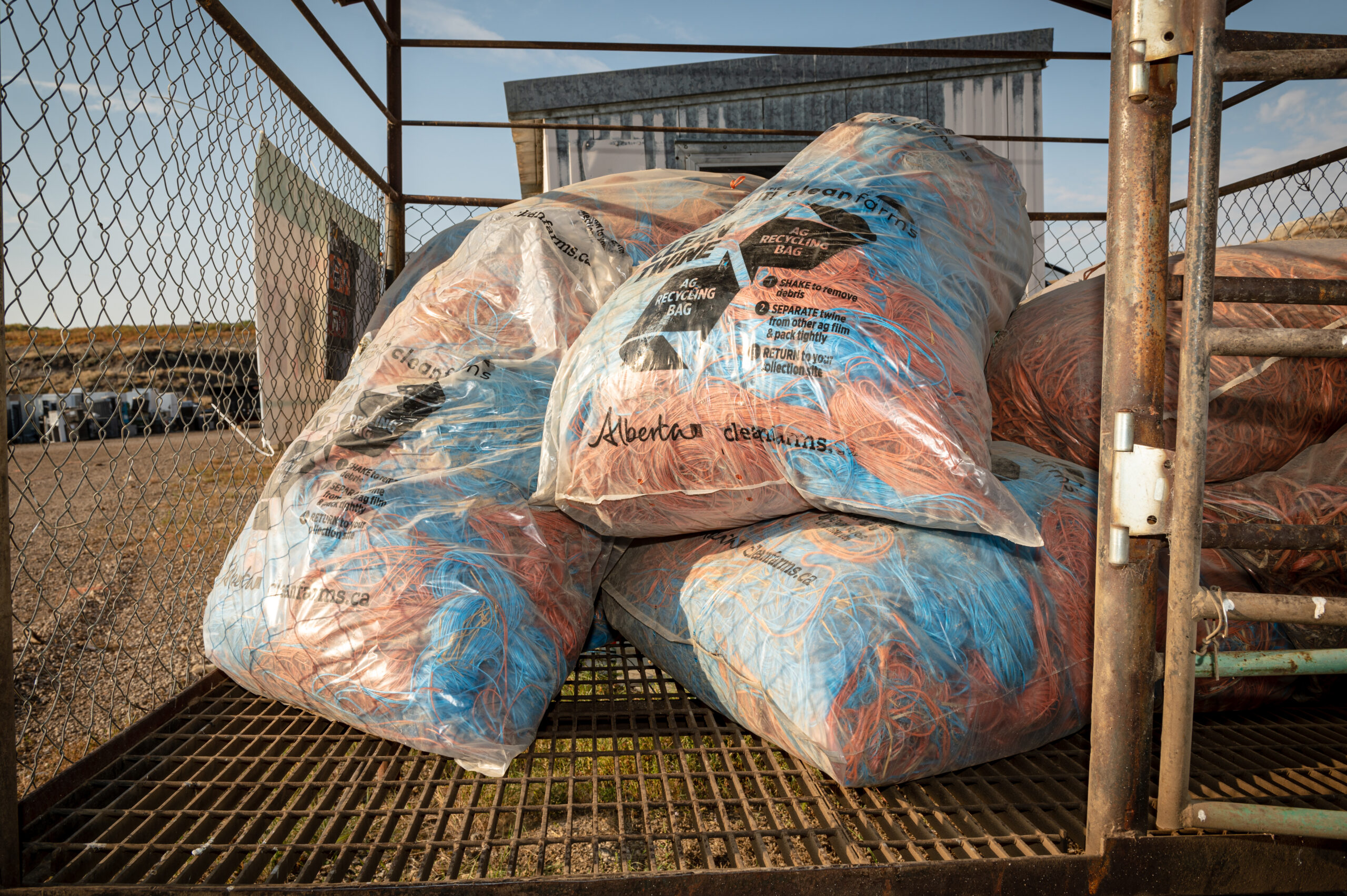
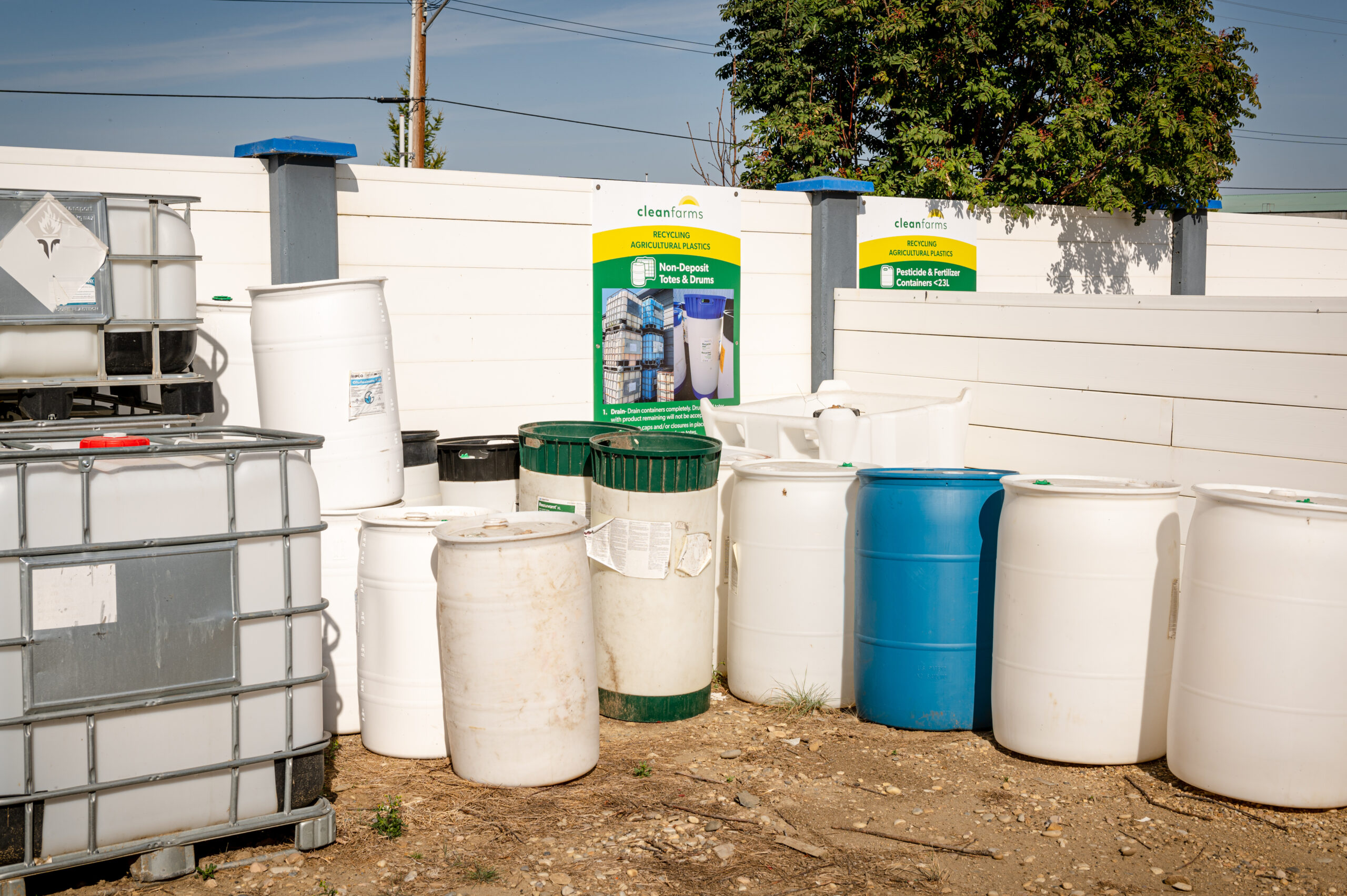
As a Producer Responsibility Organization (PRO), Cleanfarms operates a growing suite of programs that collect a wide range of used agricultural plastics. These include crop input packaging, agricultural plastic film, maple tubing, and other materials generated on farms every year.
Through a nationwide network of collection sites, farmers are able to drop off their used agricultural plastics free of charge. From there, materials are transported to processors and ultimately sold into global markets, where they are transformed into new products.
“These programs give farmers a practical way to keep plastics out of landfills while supporting resource recovery,” Davin Johnson explains. “It’s about making participation easy and ensuring the material collected has a next life.”
Funding for these programs comes primarily from Cleanfarms’ industry members, with pilot projects occasionally supported through additional sources. This blended approach allows the organization to maintain ongoing operations while testing new solutions that push agricultural plastics recycling forward.

A Community-Driven Approach
Central to Cleanfarms’ success is its strong connection to the communities it serves. The organization works closely with municipal and provincial governments, agricultural retailers, and sector organizations to ensure programs reflect local realities.
“We recognize the unique challenges and needs of the local communities, and we aim to provide tailored solutions that facilitate participation,” Davin Johnson says. “We take a boots-on-the-ground approach, working closely with ag retailers and municipal collection sites to develop our offering in harmony with evolving community needs.”
Cleanfarms collaborates with organizations such as the Alberta Plastics Recycling Group (APRG) and the Alberta Plastics Recycling Association (APRA). They also work with local transportation contractors and support the development of domestic processing and end markets wherever possible, helping build local capacity while strengthening recycling systems.
The Value of APRA Membership
Cleanfarms credits APRA with playing a foundational role in advancing plastics circularity in Alberta—particularly in the agricultural sector.
“APRA plays a critical role in advancing circularity for plastics in Alberta, and has done so for many years,” Davin Johnson says. “The progress we’ve achieved in Alberta reflects the combined efforts of many stakeholders, brought together through APRA’s leadership and membership network.”
The Agricultural Plastics Recycling Group, supported by APRA, has been central to Cleanfarms’ work on piloting grain bag and twine recycling across the province. Cleanfarms has long valued its involvement at the governance level as well.
“We value the opportunity to support APRA as a member of its board, contributing to discussions that help promote and shape the organization’s work,” Cleanfarms adds.

Innovation Amid Complexity
While progress continues, agricultural plastics recycling is not without its challenges. Many agricultural plastic products—particularly pesticide and fertilizer packaging—are subject to strict regulatory controls due to the nature of the materials they contain. This limits the potential end uses for recycled plastic.
One such solution is Cleanfarms’ “Bottle to Bottle” project, which explores the feasibility of recycling empty pesticide and fertilizer jugs back into new jugs—a closed-loop approach that could represent a significant breakthrough for the sector.
As part of this project, Cleanfarms has contributed to collaborative product innovation alongside McKenzieIBC/Snyder and BASF. Together, the partners have developed an intermediate bulk container (IBC) tote with a reusable base made from 100% post-consumer recycled plastic sourced from agricultural materials. “We anticipate this will be just one of several circular economy opportunities for the future,” Davin Johnson says.
Looking Ahead
Looking forward, Cleanfarms remains focused on its core objective: reducing the net amount of agricultural waste sent to landfill. Through continued collaboration with local and global recycling communities, the organization is building momentum toward a more circular agricultural economy.
“These projects are blazing the trail for our future,” Davin Johnson says. “They will continue to drive innovation and partnerships that support the growing demand for sustainable solutions in Canada’s agricultural sector.”
At the heart of every initiative is a commitment to farmers and the communities they support.
“Beyond all else, our aim will always be to support farmers through programs that are accessible and effective in keeping local communities clean,” Davin Johnson emphasizes.
What Becomes What website link: https://cleanfarms.ca/what-becomes-what/